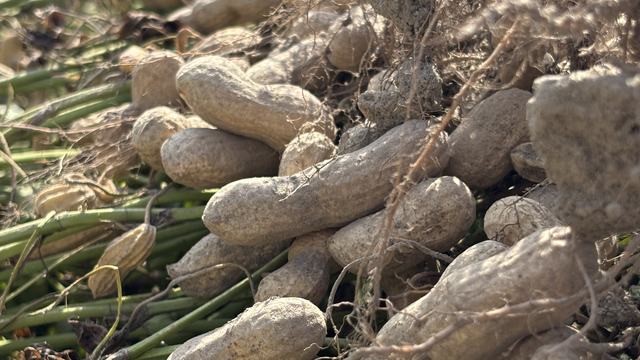
Approximately 95% of fields have been dug in the region with 75% threshed. Harvest conditions have been good for field operations during the weeks of October 12 and 19. Rain over the weekends of October 10 and 17 was modest, and growers in the region were able to return to field operations quickly. Most peanuts should be harvested by November 1.
Yield reports point to an average or slightly below average crop across the region. Market grade characteristics are average relative to previous years. Several farmers have reported Aspergillus flavus contamination. The organism is the causal agent for mold and production of aflatoxin. Damage is associated with damaged kernel and loose shelled kernel fractions of farmer stock.
Segregation 2 damage caused by burrower bug has been reported. This soil-borne insect feeds on developing pods in soil and causes extreme damage to kernels. The damage is noticeable only when the skin is removed. Movement to Segregation 2 status or Segregation 3 status in the case of Aspergillus flavus results in a farm gate value that is approximately 35% of contract prices. Peanuts that cannot be cleaned to adhere to standards for Segregation 1 are crushed for the oil market. The full extent of both Segregation 2 and 3 across the region is currently unknown. Aspergillus flavus and damage from burrower bug are more likely to occur when dry conditions are experienced during the cropping cycle, especially during the later portion of the season. There are no easy solutions to these problems. Irrigation can reduce risk of both Aspergillus flavus and burrower bug damage. Deep tillage in the form of moldboard plow can reduce risk of burrower bug. However, this tillage practice is expensive due to fuel costs, is a slow operation, and leaves soil vulnerable to erosion. There are currently no insecticides labeled for use in peanuts that suppress burrower bug.
Yield potential is estimated at 4,050 pounds/acre (4,536 kg/ha) across the region.