The following information can be used while deciding how to approach calcium needs for Virginia market types. These recommendations are based in part on data from trials but also from discussions with crop consultants in North Carolina with a great deal of experience helping farmers manage peanuts. I will post some of the data that form the basis of these recommendations at a later date.
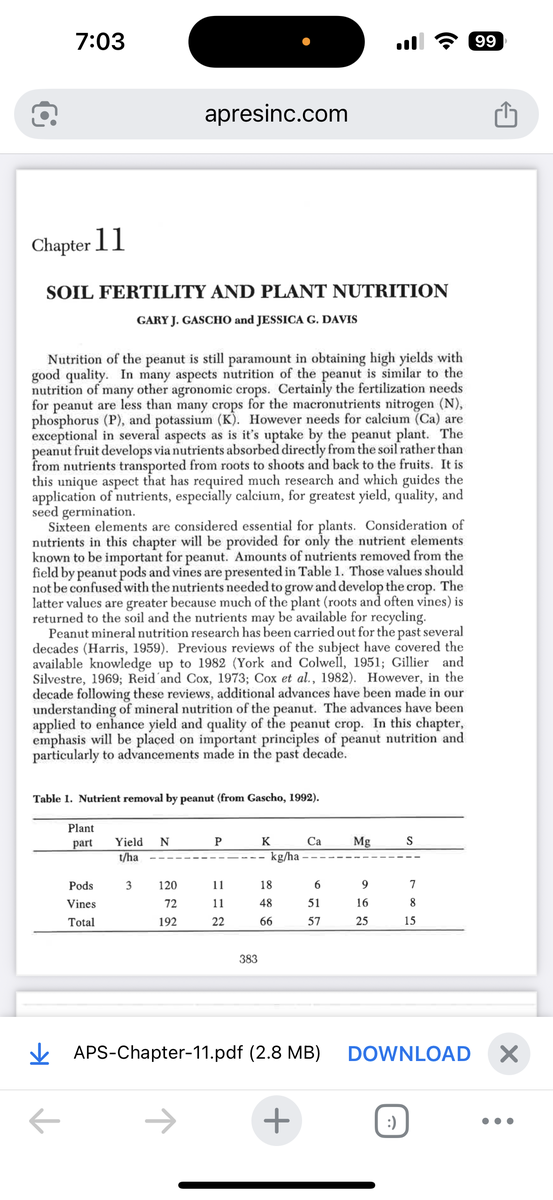
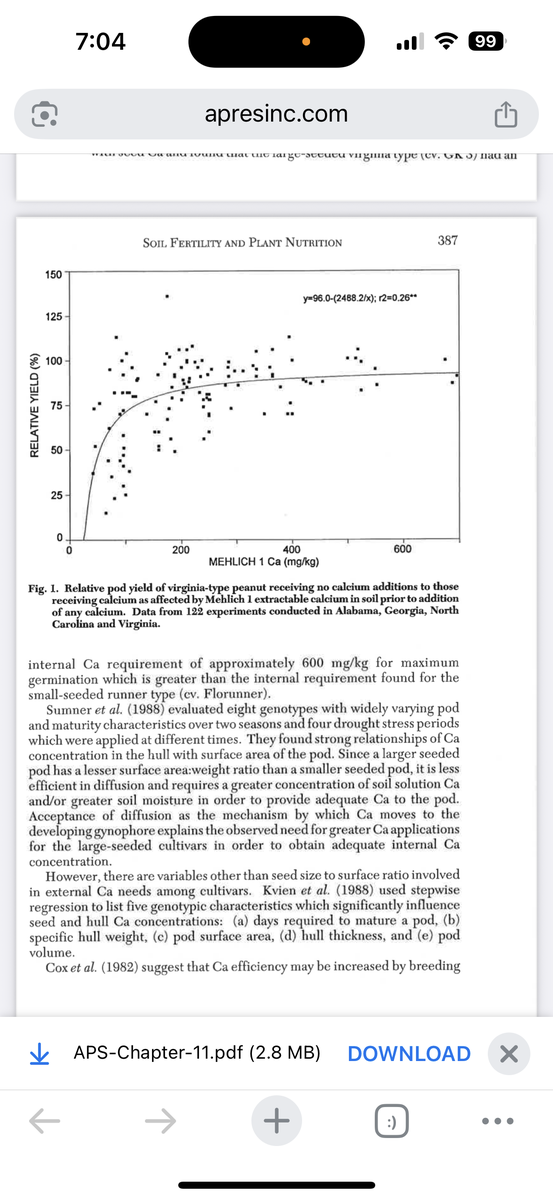
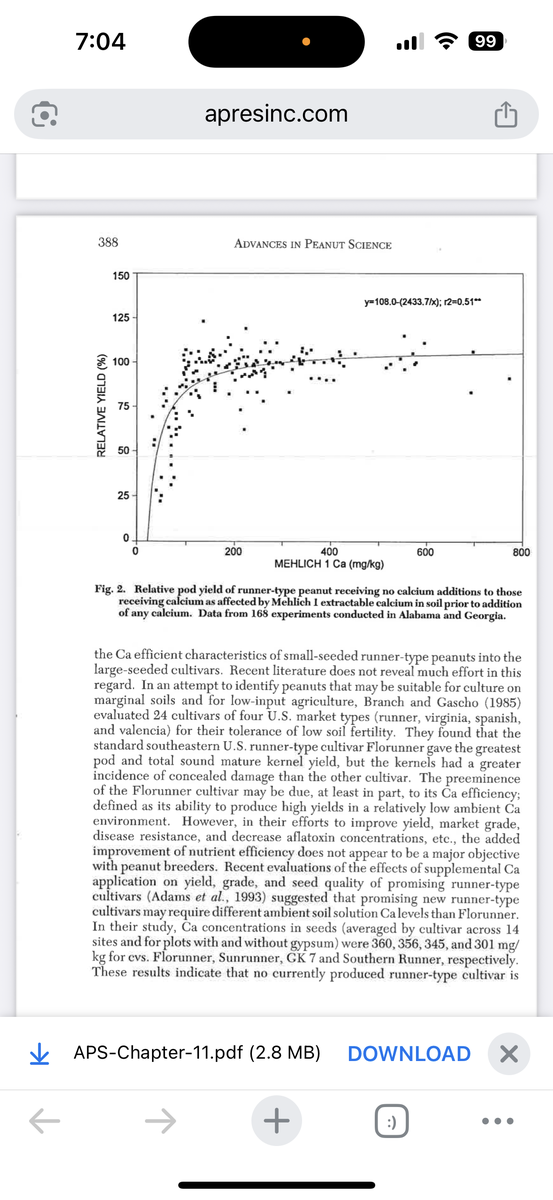
There is a lot of variation in how peanut yield is linked to soil calcium (note the variation in response to Virginia market types compared to the closer relationship for runner market types from figures found in an older book chapter.) Response can be unpredictable.
However, logistics and expense of gypsum have many of us asking how can we make life easier around this input without creating excessive risk.
Virginia market types need gypsum. But I have considerable data showing that rates lower than what we recommend as our 1X rate are just as effective in many cases. A major assumption is if products can be applied uniformly at lower rates than those in our production guide. As we approach the application window for gypsum in the 2026 crop, I’ll follow up with more details.
A Single Rate Applied Across the Entire Field without Grid Sampling and Variable Rate Application
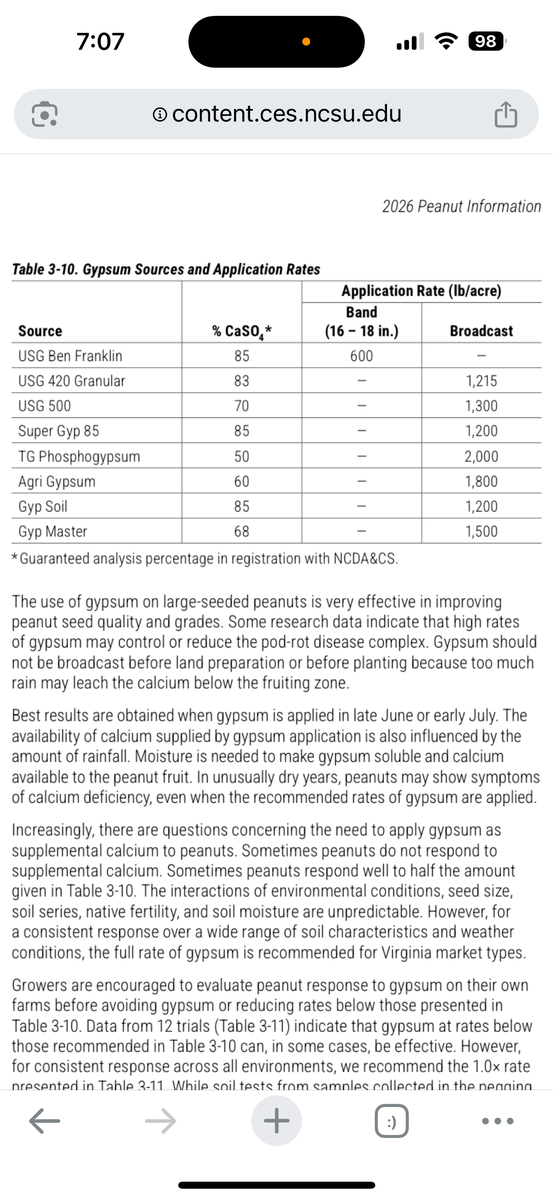
2. Applying 70% of the recommended rate in Table 3-10 regardless of soil calcium level increases risk of not realizing the highest yield and market grades offered by the recommended rate in Table 3-10. However, the lower rate can be as effective as the recommended rate in Table 3-10 in many fields with a lower cost and fewer logistical challenges.
Possible Alternatives to Broadcast Applications of the Same Rate Across the Entire Field
1. Using the Relationship of Soil Calcium in Pounds Calcium per Acre to Target the Gypsum Rate
Using soil calcium level has proven inconsistent in determining if a response to gypsum will occur for Virginia market types. However, increased cost of gypsum and logistical challenges in moving gypsum to farms and making timely applications has created situations where lower rates than recommended in Table 3-10 are increasingly attractive. The following are rules of thumb that are reasonable alternatives to applying the recommended rate of gypsum across fields if grid sampling information is available.
A. If 1000 pounds calcium per acre in soil or greater, apply 50% of recommended rate in Table 3-10. If 50% cannot be applied uniformly, increase the rate until you reach the lowest rate that can be applied uniformly.
B. If 700-1000 pounds calcium per acre in soil, apply 75% of recommended rate in Table 3-10.
C. If <700 pounds calcium per acre in soil, apply recommended rate in Table 3-10.
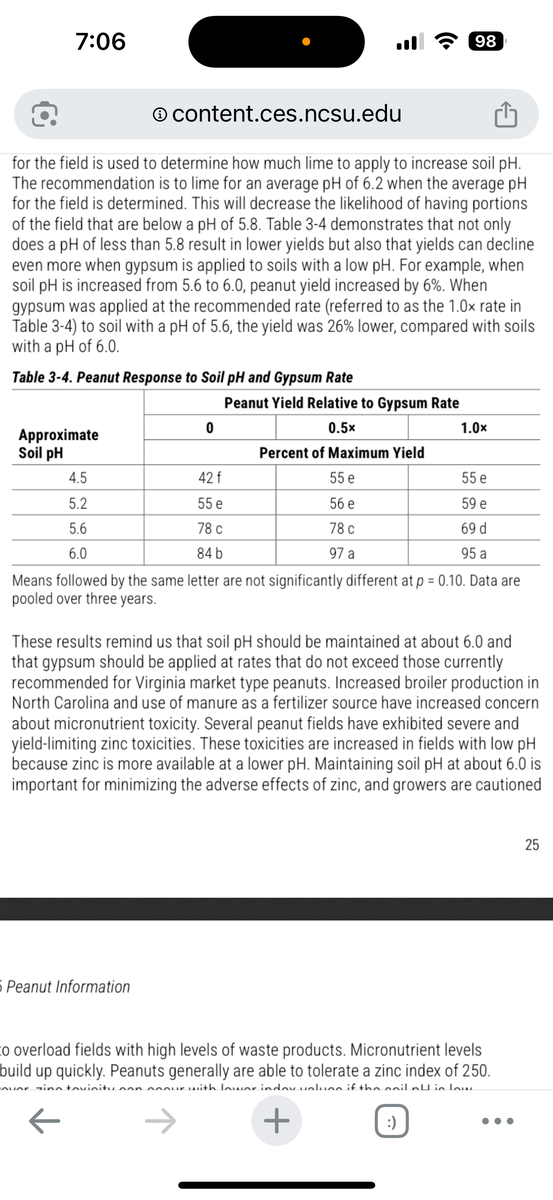
2. Do not apply gypsum if soil pH during the cropping cycle is expected to be 5.6 or lower.
Table 3-3. Peanut Response to Soil pH and Gypsum Rate*
*Means followed by the same letter are not significantly different at p = 0.10. Data are pooled over three years.