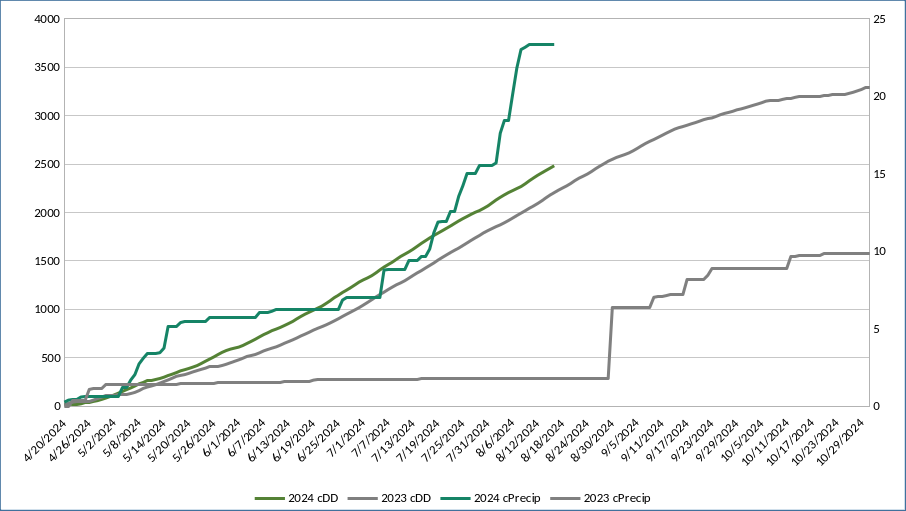
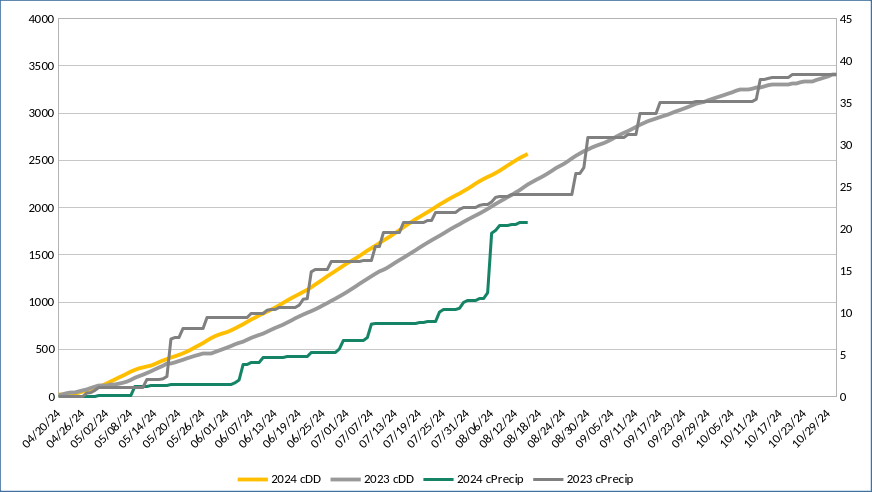
Heating units from April 20 through Aug 15 at Blackville and Florence are about 14% greater than what they were this time last year. Overall rainfall amounts at Blackville were about 4" less this year with Florence about 7" more than last year, though as we know receiving a lot of rain in a short period brings its own challenges. Depending on the field, how wet it is, and when we may be able to return, we have both waiting for ground rigs to gain access and airplane/drone applications going out. Low volume of application from airplane reduces overall penetration through the canopy though helps some where it does reach. Due to this, I would not be overly planning to anticipate much opportunity for soil/white mold control from the application itself. In this case, if I wanted to apply a product with improved white mold activity, I may want to save it for when I could get a ground sprayer through the field, instead choosing to use teb in combination with something like bravo or using a combination product. I have not yet seen data one way or the other examining performance of drone applications for soil control, could be interesting for another test.
Mixed worm populations are being seen and treated. These include some VBC, corn earworm, armyworms, and soybean looper. Of these, VBC and usually corn earworm can be managed with a pyrethroid, whereas looper and armyworms are better treated with a worm insecticide. Dimilin can be used preventatively for VBC populations before they increase to threshold levels, but it has a 30 day PHI and is not for established populations.