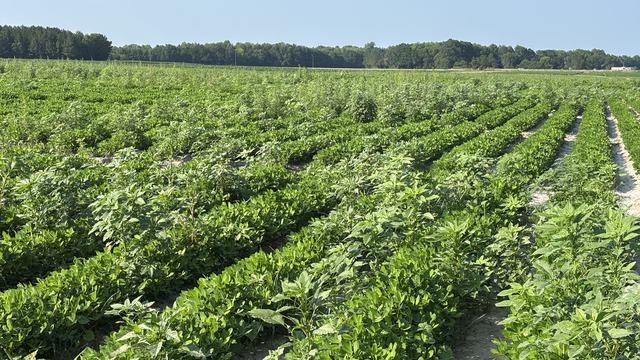
Hopperburn
Hopperburn caused by potato leaf hopper is showing up in some fields. This can be common during hot dry weather and tends to first appear near field borders. Most insecticides that are available are broad spectrum and pose a risk to killing beneficial insects, which increases our risk of flaring spider mites. Based on this and in light of the comparatively lower economic impact of hopperburn injury on peanut, I generally do not recommend treating a field for hopperburn. That being said, Vertento (isocycloseram) is also labeled for leaf hopper control, but since the typical amount of leaf hopper injury is not considered to be economically alarming, depending on the cost of an application of this product, more work would need to be conducted to demonstrate the cost effectiveness across a range of injury levels.
Worm prevention
As fields approach the 75 (and 90) fungicide application, it can be beneficial to include the insect growth regulator Dimilin (diflubenzuron) to prevent velvetbean caterpillar larvae from advancing growth stages. This can be an inexpensive preventative buffer against future worm populations. The label for Dimilin also includes armyworms.
White mold
Fields that have a history of stem rot/white mold disease benefit from fungicides with improved efficacy against this disease, particularly near the 60 to 90 day applications. This includes Elatus, Excalia, Convoy/Umbra, and also Provost Silver. Tebuconazole is an effective product, but we have several options that have greater efficacy for fields that have a history of increased disease pressure. While the hot and dry weather is less favorable for late leaf spot development, it can stress the peanut plant and also encourage development of white mold where it is in the field. Efficacy of individual products can be improved by watering in the fungicide within 24 hours after application or likewise applying the fungicide at night or pre-dawn when the leaves are still folded. This increases penetration of the fungicide through the canopy.