LLS on Volunteers
Similar to recent years, the end of May/beginning of June has brought visible late leaf spot lesions on a limited number of peanut volunteers. Most show no signs of infection. Those that do have so far been susceptible varieties in parts of fields where severe infections and defoliation occurred last year. Infections typically first develop near the bottom of the canopy closest to the soil where the fungal spores are first produced and then dispersed from.
Late leaf spot is most readily distinguished from other non-problematic spots (surfactant burn, herbicide, or physiological responses) by the presence of bumpy conidiophores on the underside of the late leaf spot lesion (pictures attached). The conidiophores are the location of spore production and can look fuzzy or textured. On brand new/infantile lesions or when conditions have been dry with low RH these may not always be noticeable. On the other hand, lesions resulting from several non-disease causes are typically smooth and often lighter in color. A small hand lens aids with visibility of the presence or absence of these structures. Scouting fields helps not only to ID potential issues early, but likewise helps inform management. Fields planted to peanut this year that are near fields where there were leaf spot management challenges last year (including fields rotated in split sections) can benefit from a 30 DAP fungicide application and/or including a systemic fungicide product in with the first application. Addition of a systemic product is likewise beneficial if rains or wet field conditions have delayed a fungicide application.
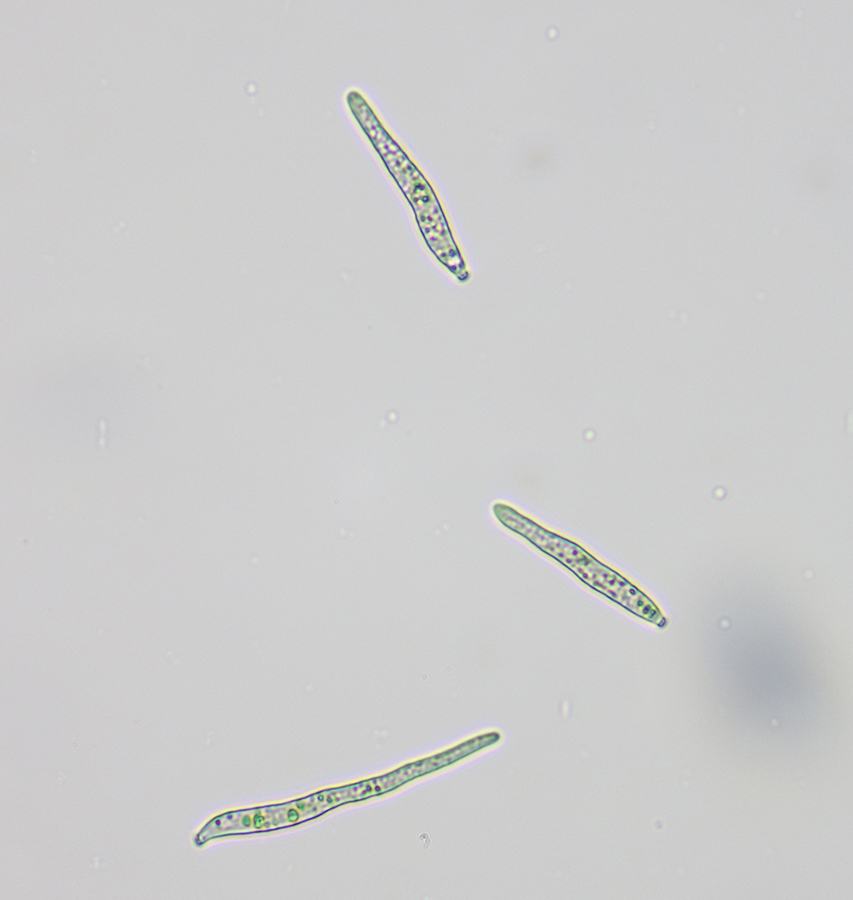
The following is an image of a spore associated with late leaf spot disease.